I got my first real stereo in the early 90’s. I was 15 or 16 at the time. My dad took me to the hi-fi shop on Erie Boulevard in Syracuse NY. I got to check out a bunch of components and audition speakers. I’ll be the first to admit, I didn’t know what to listen for at the time, other than “good lows and highs”. I ended up with 3 Pioneer pieces: a receiver (with AM/FM radio), a 6-disc CD player, and a tape deck. So many mix tapes were made – it was a favorite pastime for me and my friends. The speakers I chose were Paradigm, which I still have today, though no longer on the main system.
When I got to listen to music on something other than a small boom-box, it was a HUGE deal. I went from a mono cassette alarm clock to a legitimate listening setup. I could close my bedroom door and immerse myself in the sounds…read the liner notes and let the songs take me somewhere new. The volume – so loud! I could almost step inside the songs! I’d imagine what it was like to be in a band. The experience was so powerful that it set me down a path that I’m still on today, as a career and hobby.
Back then, hi-fi shops carried Monster Cable. I was quick to buy the best I could afford on my Pizza Hut salary. I noticed right away that they bettered the stock cables that came with the components. The music took on more life. The tone changed. I could feel more low frequencies and everything became more clear, at the same time! So whenever I had some extra cash, I’d upgrade to the next model. Within a year, I had the top-of-the-line interconnects (RCA cables) offered by Monster running from my CD player to the receiver. I learned that’s the best place to start to hear the most obvious improvement – starting with the source. Over the next decade, I’d occasionally swap something else – smaller gauge (thicker) speaker wire, custom interconnects made by a solder-savvy friend…each addition brought welcome changes.
I should mention that cables don’t ADD anything. Certain cables can alter the sound by rolling off high frequencies, or by not giving the audio an unobstructed, clear path. Capacitance (or how much energy the cable can store) matters. The length of the cable matters. A common phrase to describe a good cable is one that “simply gets out of the way.” Also — it’s all system-dependent. A new cable can alter the sound a lot, or very little depending on how revealing the system is. Ok, more nerdy stuff later…
In 2010, I experienced the single most important cable upgrade to date. Maybe the most important change I will ever make. It opened my eyes to a new level of realism, clarity, and enjoyment while listening to music. I recently purchased a dedicated DAC (digital-to-analog converter) for my listening system, a PS Audio Digital Link III. It was being fed coax S/PDIF (a digital RCA connection) from my Rotel CD player. After hearing significant gains with my new DAC, I felt that I would likely see further improvement by upgrading my Monster RCA cable running from the DAC to the integrated amp. Upon researching, I came across a forum where someone mentioned a solid core cable design that was not expensive and brought big improvements to the table. Solid core cable designs are typically smaller gauge than their stranded counterparts and consist of fewer, individually insulated conductor wires. Stranded cables can be described as a bunch of tiny gauge strands wrapped together – touching each other within the insulation working as a single conductor.
I read more about solid core designs and found a company offering FREE RCA interconnects to get people to check out their cables. It was the base model, consisting of just one twisted pair of very small individually insulated solid silver-coated copper wires per cable. I ordered it that day! The company said an exhaustive break-in period would be necessary to hear the full potential of the cable, but as soon as I put it in the system, it simply BLEW MY MIND.
Here’s a photo. Note how small the wires are:

The music became much more open with space around the instruments. There was a substantial increase in front-to-back depth. I could pick out individual string instruments, instead of hearing a vague group of strings. It was easier to discern the base notes. Reverb tails extended longer into blackness. I kept rechecking that nothing else had changed. I could hear a whole other octave on the bottom end. The sound bloomed! I put the Monster cable back in and heard the pillowy low-end return along with smeared imaging, flatter soundstage, and muffled sound. Holy shit! This only cost me $10 shipping.
We must remember that music is an art form. Moreover, the same piece of music is interpreted differently by every person that hears it. The closer we get to hearing the artist’s intention, the better we interpret the art.
Solid core cables became my new audio obsession. I discovered some science behind it, referring to the “skin effect”, and how electrons can jump from one strand to another in stranded designs. Since then, I have purchased solid core interconnects for every system in the house (four rooms synchronously streaming over Wi-Fi), as well as solid core speaker cable for the main system and kitchen, and a solid core USB cable for the Mac Mini (digital cables are a different animal altogether, possible topic for a future post).
My advice to anyone curious about improving the sound of their system is to make a minimal investment and purchase a solid core cable to run from your source (CD player, computer, record player, etc.) to your receiver or amp. If you have specific questions about your setup, you can always reach out to me through this site.
Now for my cable recommendations! These are analog cables, addressing the most common applications, all available through Amazon:
RCA to RCA low budget-

Blue Jeans Cable LC-1, 3ft. Solid copper core coax design, made in USA. Very affordable. The “LC” stands for low-capacitance. Gets out of the way! This is a great introduction to cables of a higher quality, and may be as far as most will go. All I can say is “Try it!”
RCA to RCA bigger budget-
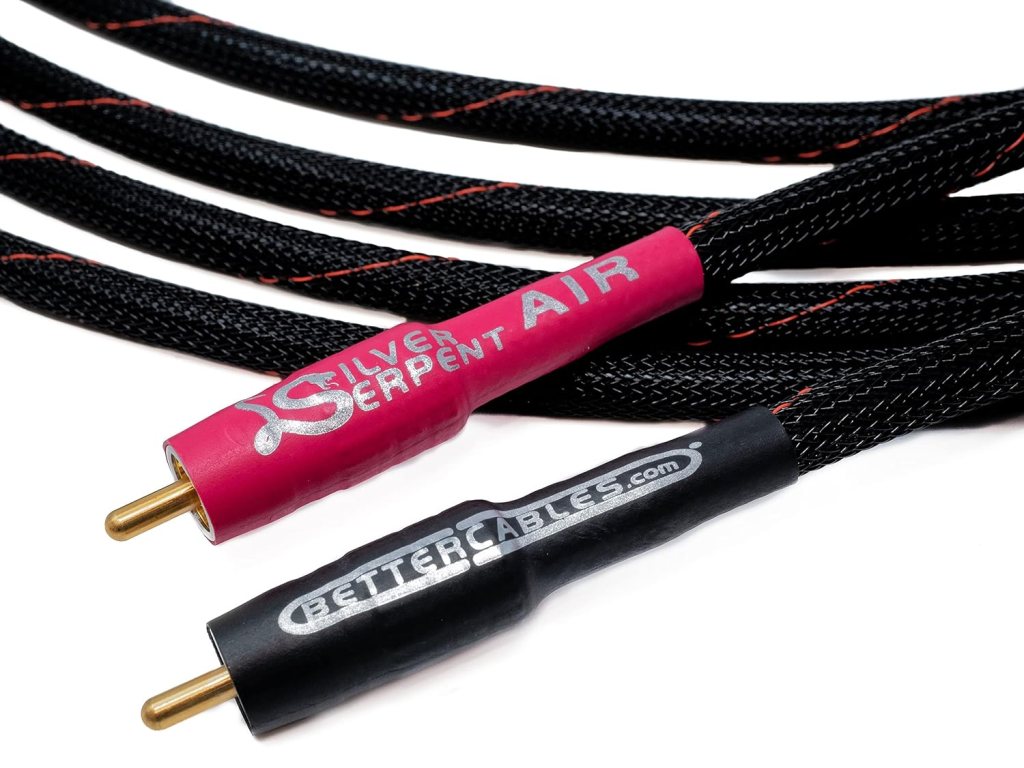
Better Cables Silver Serpent AIR, 3ft. Solid silver core, made in USA. This cable will bring clarity, detail, and improved soundstage. Also low capacitance. Will allow more of everything to come through. Get ready! Highly recommended. If you prefer a shorter length – Silver Serpent AIR, 1.5ft.
XLR to XLR-
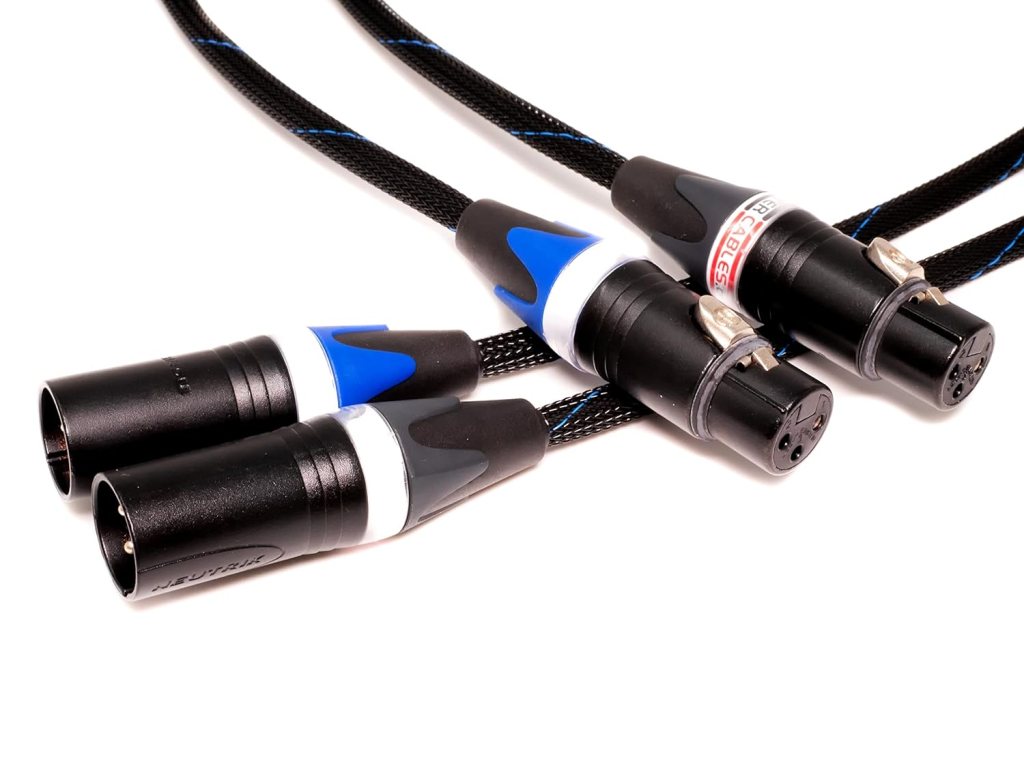
Better Cables Blue Truth ULTRA, 3ft. Like their Silver Serpent AIR RCA, this will be like taking a veil off your speakers. A balanced XLR connection is always preferred if you have the equipment for it. You may be surprised what you hear! Here’s the shorter length – Blue Truth ULTRA, 1.5ft.
3.5mm stereo to dual RCA-

AudioQuest Evergreen Audio Interconnect, 3ft. I use a few AudioQuest cables in my various setups. If you’re running out of a mini headphone jack on your computer, phone, or any application needing this configuration, try this cable. Here’s the 2 meter version if you need more length – AudioQuest Evergreen 3.5mm to dual RCA, 6ft.
3.5mm to 3.5mm-
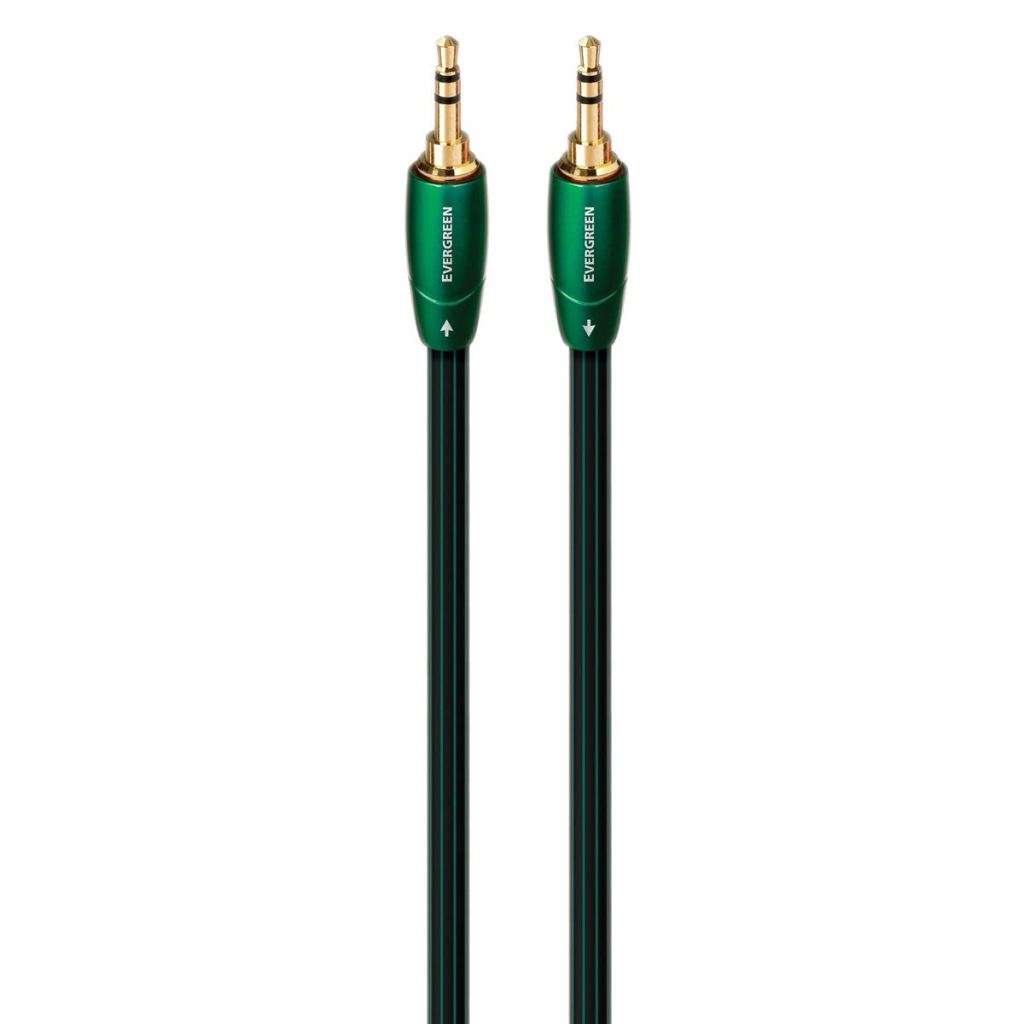
AudioQuest Evergreen, 3ft. Same as above, with another 3.5mm instead of dual RCA’s on the one end. Need it longer? AudioQuest dual 3.5mm, 6ft.
Keep in mind that cables need some time to settle in and sound their best. Don’t laugh! It’s true, things improve after time. Don’t hesitate to reach out with any questions. Be sure to subscribe! Thanks for joining us.
This post contains affiliate links. If you purchase something through one of these links, we may receive a small commission at no extra cost to you. Thank you for your support.
 Smotown
Leave a comment